
You’ll want to read this part first, if you haven’t already –
It was never great, but it wasn’t gut busting bad before.
When I left off last time, I talked about how I was working under the hypothesis that my problems were CVS, for lack of a better answer.
You might wonder why I wasn’t more dedicated to getting medical help and guidance. Well, friends, let’s talk about that real fast. See, there’s a couple of reasons why, and each one are things that a lot of people with IBD and other hidden illnesses go through.
One, I’d already experienced doctors that didn’t believe me, weren’t inclined to advocate for me, or willing to explore further. They made a quick diagnosis and once that was disproved, they were disinterested.
Two, sometimes I didn’t have insurance. Back then, that left me very basic clinics as my only option for medical care. No one’s getting anything diagnosed at those.
Three, when it was bad, it was very bad. But most of the time it was mostly uncomfortable but manageable, and these episodes only happened occasionally. It was easy to ignore when it wasn’t happening.
When I was having an episode [what I’d call a flare now, but then I didn’t know] I wanted to die, it was so bad. But hahaha, joke was on me when I woke up the day I needed to go to the hospital. I truly thought I was dying.
Turns out that death was even closer than suspected!
So you’re saying that I was literally full of shit?
My first days in the hospital were what I call “soft” days. Everything went by in a fuzzy blur of nurses, blood specialists, heparin shots and visits from residents that I barely remember. It took a bit before I could really focus on much. I’d get it together enough to check in on social media, because my friends were worried, and to message my long-distance partner, but I was functionally out of order for a while.
When the surgeon came to talk to me about what happened, I learned that I had suffered a bowel perforation in my small intestines, and I had been leaking for long enough to really screw things up for me. In other words, it was a real mess in there. The operation had taken a really long time because he had to clean up so much. It was very clear that I came uncomfortably close to death.
My usual coping mechanism, as I’ve mentioned, is to crack jokes. If I’m not making jokes, I am dead. That’s how you’ll know. So my response was, “So you’re saying that I was literally full of shit?”
My doctor burst out laughing. Mission accomplished.
I spent eleven days in the hospital.
If you want to know more about a perforated bowel, this page is an informative read. It lists possible complications and I ended up with almost all of them. I had sepsis, I had internal infections, I had an abscess and fluid that needed to be drained, I had a wound infection. None of these things were the fault of my caretakers, but the result of basically having a big toxic spill inside. Lucky me!
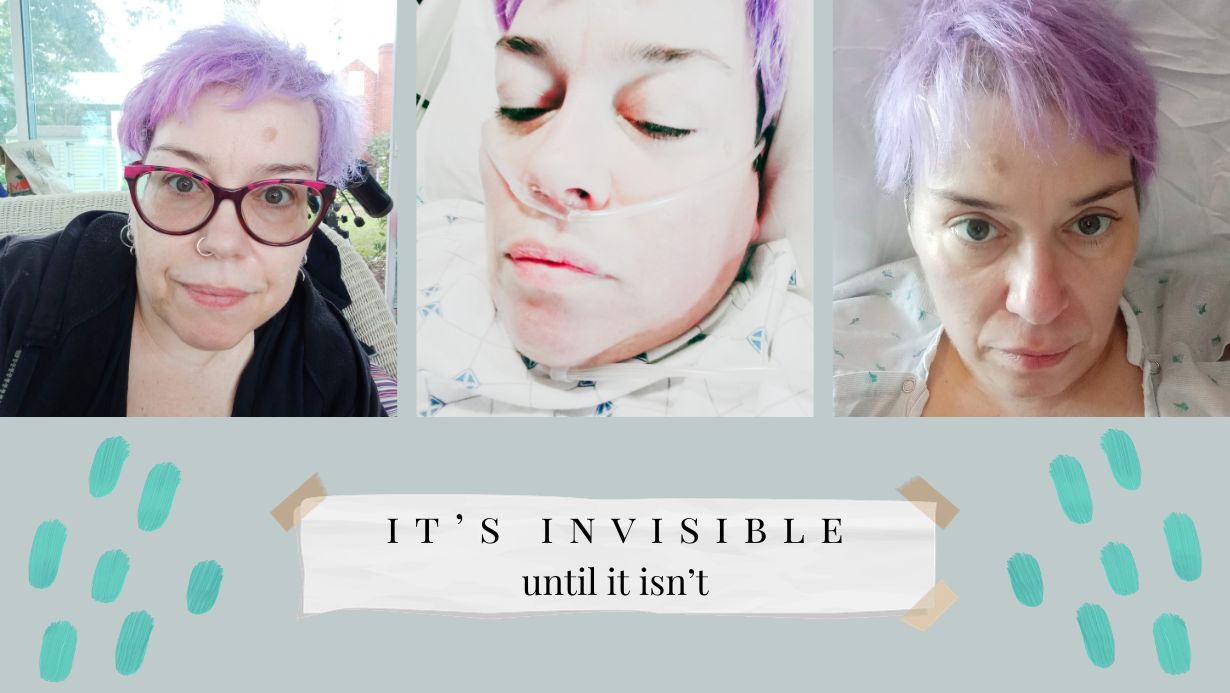
I lost a section of small intestine near the terminal ilium and gained a big [BIG] surgical incision. I also lost a ton of weight. I was lucky enough to have enough fat to keep it from being a bigger problem, but I dropped weight rapidly, and it didn’t help that once I was allowed to eat again, everything tasted awful. That’s a common after-effect of anesthesia, I learned, but for me it took months to go away. I went from soft and rounded to gaunt and tired looking as I struggled to find things to eat that would taste less like mud and ashes in my mouth. Milkshakes were my go-to, and I was grateful that I was able to drink them.
Another unfortunate after-effect that stuck around and still bothers me is postoperative cognitive dysfunction. Basically, my memory isn’t as good as it used to be and I often struggle to remember things I’ve known for years, like song lyrics or names for objects or concepts. I get bad brain fog some days, though that’s unclear if it’s from inflammation or the cognitive dysfunction leftovers. But because inflammation is one of the factors that can cause extended cognitive dysfunction, I suppose it’s all in the same wheelhouse. For most people, this clears up not long after surgery. Lucky me, I’m an outlier. If you’d like to read more about this – something that isn’t often discussed when risks of surgery are brought up – there’s some info here.
I suspect that my problems stem from being under for so long. My other surgeries didn’t give me the same issues like food tasting bland/gross or the severe cognitive issues. I’m thankful for that. Not that they’ve been easy, either.

My recovery was long and uncomfortable. My wound wouldn’t heal and I spent months having to go in daily for my surgeon and his staff [my heroes, seriously] to clean and pack it. Eventually I learned how to do it myself, but they really took care of me until we made that switch.
I got my official diagnosis, Crohn’s Disease. I cried with relief when that happened, because it was an answer, finally, to what had been going on. Not a great answer, but at least an actionable one. We battled c. diff and innumerable infections, and I struggled to become active again and heal my skin, my wound, and my guts. I was put on a combo of oral Azathioprine and Infliximab infusions. For a while, things stabilized.
Until they didn’t.
I didn’t sign up for any of this, yet here we are.
I failed out of Infliximab after about a year. It just stopped working for me, which is a thing that happens. My Gi wanted to switch me to Stelara, which treats IBD using a different approach than Infliximab. It’s a self-administered injection, which freaked me out but if it would help, I was down. Only problem was that my insurance, which is Medicaid managed by a big name insurance company because I am a poor artist, was not down. In fact, they fought me every step of the way, and I was off any sort of treatment for about six months.
That was very bad news for me, as it gave time for my Crohn’s to get worse, regressing to the point where my inflammation was a lot worse and my terminal ilium had to go. I also had a surgical hernia from my original surgery, thanks to the emergency need to get in there. So I lost more small intestine and the valve at the terminal ilium, and got another big incision, because the attempt to do it laparoscopically failed. The damage to my intestines and fascia was much worse than originally thought. Lucky me again!
And as luck would have it, I had issues with healing again and burst my incision. I was put on a wound vac, and that set up another long stretch of healing. I learned a lot about wound care from my illness, let me tell you!
Since then I’ve mostly been concerned with getting back to some semblance of normal, whatever that is at this point. I am still struggling with getting my symptoms under control. Removal of the terminal ilium sets up some unpleasant effects, like my meals going through a much speedier trip through my digestive system. I can’t eat a lot of foods that I love because of that.
My meds are still being adjusted to see if Stelara will be the treatment that helps me get closer to remission. So far, I’m not convinced. I have a lot of fatigue and can manage to do about one task before I’m done for the day. Maybe two, if I’m in a particularly good place. It’s really limiting.
I’m currently waiting to have yet another CT scan to see how my disease is progressing or healing. Keep your fingers crossed.
If you have questions about Crohn’s or IBD, I welcome them and I’ll answer whatever I can. I’m very open about talking about my disease, as you can see, because I think it’s very important! Education could have saved me from getting so advanced that I ended up losing a lot of guts. I don’t want that happening to anyone else.
Thanks for reading!



2 thoughts on “My journey to a diagnosis, part two”
What a shitty journey to be on! *ba-DOMP-tssh*
Another thing that isn’t talked about much in regards to surgery is that it’s pretty common for people who’ve had surgery to have a short(ish) round of depression. All the drugs they use for anesthesia can mess with your neurotransmitters, and even if it’s wanted or needed, surgery is one of the most radical boundary invasions a person could suffer. I mean, they’ve got their hands INSIDE YOUR SKIN!
You’re speaking my shitty joke language! 💩
That depression period is NO JOKE. And there’s surgical trauma to add to it – both of which I’m still dealing with and that’s another thing that was never brought up to me as a possibility by any medical staff. We’re just meant to go to sleep, then wake up with a gaping hole and the knowledge that someone was all up in us in weird and alarming ways, and NBD, just go home, you’ll be fine. Whee!
Trying to get professional help for that is fun, too.